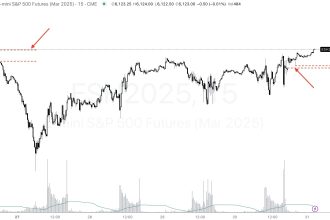
In technical analysis, a gap refers to a price zone in financial markets where there is no trading activity between two consecutive trading periods (e.g., the opening, closing, high, or low prices of one period do not overlap with those of the previous period). Gaps typically reflect drastic shifts in market sentiment (such as panic selling or frenzied buying) or result from significant news/events causing supply-demand imbalances.
1. Types and Characteristics of Gaps
Gaps are categorized into four main types based on their causes and market implications:
(1) Common Gap
- Definition: The most frequent type of gap, occurring in low-liquidity or inactive trading environments (e.g., small-cap stocks with low volume) or within trading ranges.
- Key Features:
- Small in magnitude and usually filled within 3–5 trading days (i.e., prices revisit the gap zone).
- Carries little significance for trend analysis, merely indicating short-term supply-demand mismatches.
- Example: A stock closes at $10 on Day 1, opens at $10.20 on Day 2 with intraday trading between $10.10–$10.30, forming a $0.20 upward common gap. Prices later fall back to $10, filling the gap.
(2) Breakaway Gap
- Definition: A gap formed when prices breach key resistance or support levels, signaling the official start of a new trend (e.g., breaking out of a range into an uptrend or downtrend).
- Key Features:
- Accompanied by significantly increased trading volume, reflecting active capital participation.
- Unlikely to be filled in the short term (or even long term), serving as a strong confirmation of the trend.
- Example: A futures contract trades sideways near $1,000 for months, then gaps up to $1,030 on heavy volume (breaking resistance), forming a breakaway gap. Prices subsequently rise to $1,200 without filling the gap.
(3) Continuation Gap
- Definition: A gap appearing mid-trend, indicating the trend is accelerating. Also known as a “measuring gap.”
- Key Features:
- Aligns with the trend direction and occurs during the mid-stage of a trend (e.g., after an initial price move in an uptrend).
- Can estimate the trend’s remaining target: the distance from the trend’s starting point to the gap is often equal to the distance from the gap to the trend’s endpoint (“measuring rule”).
- Example: A stock rises from $50 to $80, then gaps up to $85 (continuation gap). It continues to $120 ($85 + $30, near the measured target), with the gap unfilled.
(4) Exhaustion Gap
- Definition: A gap appearing at the end of a trend, signaling an impending reversal. Also called a “consumptive gap.”
- Key Features:
- May be accompanied by abnormally high volume (or sometimes low volume, indicating fading momentum).
- Typically filled within a short period (e.g., 1–2 trading days), with the trend reversing shortly after.
- Example: A cryptocurrency surges from $1,000 to $3,000 amid market mania, then gaps up to $3,500 on record volume. Prices crash to $2,500 the next day, filling the gap and triggering a downtrend.
2. Analytical Logic and Practical Applications
(1) Market Psychology of Gaps
- Upward Gaps: Signal sudden strength in buying pressure (e.g., triggered by positive news), with opening prices above the prior close, reflecting optimism.
- Downward Gaps: Indicate dominant selling pressure (e.g., due to negative news), with opening prices below the prior close, reflecting panic or bearish sentiment.
(2) Key Evaluation Points
- Gap Filling:
- Common and exhaustion gaps are prone to filling; breakaway and continuation gaps are not.
- Long-unfilled gaps (e.g., breakaway gaps) often act as “price magnets,” providing support/resistance for future price movements.
- Volume Confirmation:
- Breakaway and continuation gaps require increased volume; otherwise, their validity is questionable.
- Exhaustion gaps may show “volume-price divergence” (e.g., gap up with no significant volume increase).
- Gap Location and Trend Stage:
- Gaps at trend beginnings (breakouts) are more likely to be breakaway gaps; gaps after sharp price moves (trend endings) may signal exhaustion.
(3) Integration with Other Technical Tools
- Support/Resistance Levels: A breakaway gap coinciding with a breach of key moving averages or pattern boundaries (e.g., neckline of a head-and-shoulders pattern) strengthens the signal.
- Candlestick Patterns: Gaps combined with long bullish/bearish candles (e.g., upward gap + large green candle) reinforce trend direction.
- Elliott Wave Theory: Gaps may appear in impulsive waves (e.g., Wave 3) or terminal patterns (e.g., Wave 5), aiding wave count identification.
3. Limitations of Gap Analysis
- Market Liquidity Impact:
- In low-liquidity markets (e.g., small-cap stocks, cryptocurrencies), gaps may occur frequently but are often random and less reliable.
- Ambiguity Across Timeframes:
- A common gap on a daily chart may appear as a breakaway gap on a smaller timeframe (e.g., hourly chart).
- Over-Reliance Risks:
- Gaps should not be used in isolation. Always combine with other indicators (e.g., MACD, volume, trendlines) to avoid misinterpretations.
Conclusion
Gaps are valuable technical analysis tools for identifying shifts in market sentiment and trend dynamics, with their core utility lying in distinguishing trend strength and reversal points. Traders must evaluate gaps holistically—considering type, location, volume, and market context—while prioritizing the differentiation between trend-defining gaps (breakaway/continuation) and transient gaps (common/exhaustion) to enhance trading accuracy.
Interpretations of other chart patterns are available in chart patterns