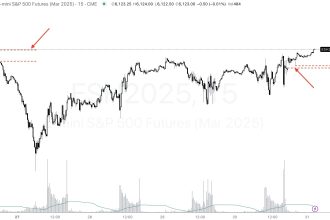
In technical analysis, a spike refers to a sudden, extreme, and short-lived price movement (up or down) that creates a sharp, isolated peak or trough on a price chart. Spikes are characterized by high volatility and often occur with significant trading volume, making them stand out from the surrounding price action. They can signal important shifts in market sentiment, trend reversals, or temporary disruptions in supply and demand.
Key Characteristics of a Spike
- Abrupt Movement:
- Prices surge or plummet rapidly (e.g., within 1–3 trading periods), forming a “spike” shape that looks like a sharp needle on the chart.
- Example: A stock jumps 20% in one day but falls back to its prior level over the next two days (a bullish spike), or crashes 15% in hours before rebounding (a bearish spike).
- Isolated Pattern:
- The spike is not part of a sustained trend; it stands alone, with no preceding series of higher highs (for an uptrend) or lower lows (for a downtrend).
- Volume Association:
- Spikes are often accompanied by unusually high trading volume during the extreme move, reflecting intense buying or selling pressure.
- However, the reversal (after the spike) may occur on lower volume (if driven by profit-taking) or higher volume (if driven by panic).
- Reversal Potential:
- Spikes frequently act as reversal signals, especially when they form at key resistance/support levels or after extended trends.
Types of Spikes
Spikes can be categorized by their direction and market context:
1. Bullish Spike (Spike High)
- A sharp, short-term rally to a new high, followed by a rapid reversal.
- Example: A cryptocurrency surges on positive news but collapses when the news is deemed unreliable.
- Chart pattern: Often appears as a shooting star candlestick (long upper wick, small body) or a gap-up followed by a bearish engulfing pattern.
2. Bearish Spike (Spike Low)
- A sudden, steep decline to a new low, followed by a quick rebound.
- Example: A stock gaps down on a negative earnings report but recovers as traders buy the dip.
- Chart pattern: May form a hammer candlestick (long lower wick, small body) or a gap-down followed by a bullish engulfing pattern.
3. Volatility Spike
- Refers to sudden surges in market volatility (e.g., the VIX index spiking during a market crash), often coinciding with price spikes.
- Indicates increased uncertainty or panic in the market.
Causes of Spikes
Spikes are driven by a mix of market psychology, news events, and structural factors:
Example: A “panic sell” spike during a market correction, followed by a rebound as rational investors buy undervalued assets.
News or Event Catalysts:
Sudden announcements (e.g., earnings, mergers, geopolitical shocks, central bank decisions) trigger knee-jerk reactions.
Example: A biotech stock spikes on FDA approval news but falls when analysts question the drug’s commercial viability.
Market Manipulation:
Pump-and-dump schemes (for bullish spikes) or bear raids (for bearish spikes) by large traders or institutions to exploit retail investors.
Liquidity Gaps:
Low-volume markets (e.g., small-cap stocks, thinly traded futures) are prone to spikes due to limited buy/sell orders, leading to extreme price moves on small trading activity.
Emotional Trading:
Fear or greed drives short-term traders to pile into or out of a position, creating unsustainable momentum.
- Technical Breakouts/ breakdowns:
- Spikes may occur when prices breach key support/resistance levels, triggering stop-loss orders or algorithmic trading signals.
Technical Analysis of Spikes
Traders use spikes to identify potential trading opportunities or trend reversals. Here’s how to analyze them:
1. Price Action Signals
- Reversal Patterns:
- Bullish spikes often form bearish reversal patterns.
- Bearish spikes may form bullish reversal patterns.
- Gaps: Spikes may leave behind price gaps, which can act as support/resistance levels (e.g., an “island reversal” gap).
2. Volume Analysis
- Confirm the spike’s validity by checking volume:
- A valid spike (e.g., a reversal signal) should have high volume during the extreme move.
- Low-volume spikes may be false signals (e.g., due to algorithmic glitches or low liquidity).
3. Indicators
- Oscillators:
- RSI or Stochastic Oscillator may show overbought (for bullish spikes) or oversold (for bearish spikes) conditions.
- Bearish/bullish divergence (when price makes a new high/low but the indicator does not) can signal a pending reversal.
- Moving Averages:
- Spikes that fail to hold above/below key moving averages (e.g., 200-day MA) often reverse quickly.
4. Support and Resistance
- A spike that tests a major resistance level (in an uptrend) or support level (in a downtrend) and reverses is a strong signal.
Trading Strategies for Spikes
1. Fading the Spike (Mean Reversion)
- Strategy: Enter a trade opposite to the spike’s direction, expecting prices to revert to their prior trend or average.
- Example:
- After a bullish spike (e.g., a stock surges to an all-time high on low volume), short the stock with a stop-loss above the spike high, targeting the prior support level.
- After a bearish spike (e.g., a panic sell-off), go long with a stop-loss below the spike low, targeting the prior resistance level.
2. Breakout Trading (for sustained spikes)
- Strategy: If the spike is part of a strong trend (e.g., a bullish spike in a strongly bullish market), use it as a breakout signal.
- Caution: This is risky, as most spikes are short-lived. Wait for confirmation (e.g., a close above the spike high with high volume) before entering.
3. Risk Management
- Stop-Losses: Place stops just beyond the spike’s high/low to limit losses if the reversal fails.
- Position Sizing: Use smaller position sizes due to the high volatility of spikes.
- Avoid Chasing: Do not enter a trade during the spike’s extreme move; wait for price stabilization or confirmation.
Conclusion
A spike in technical analysis is a powerful signal of extreme market sentiment or temporary dislocations in supply and demand. While spikes can indicate trend reversals, they are often volatile and risky to trade. Traders should use spikes in conjunction with other technical tools (e.g., volume, indicators, support/resistance) to confirm signals and always prioritize risk management. Remember: Spikes are often noise in the trend, but they can also mark important turning points—context is key.
Interpretations of other chart patterns are available in chart patterns